Ingredient evidence · Reviewed 6 August 2026

What is N-acetyl-D-glucosamine (NAG) for cats and dogs?

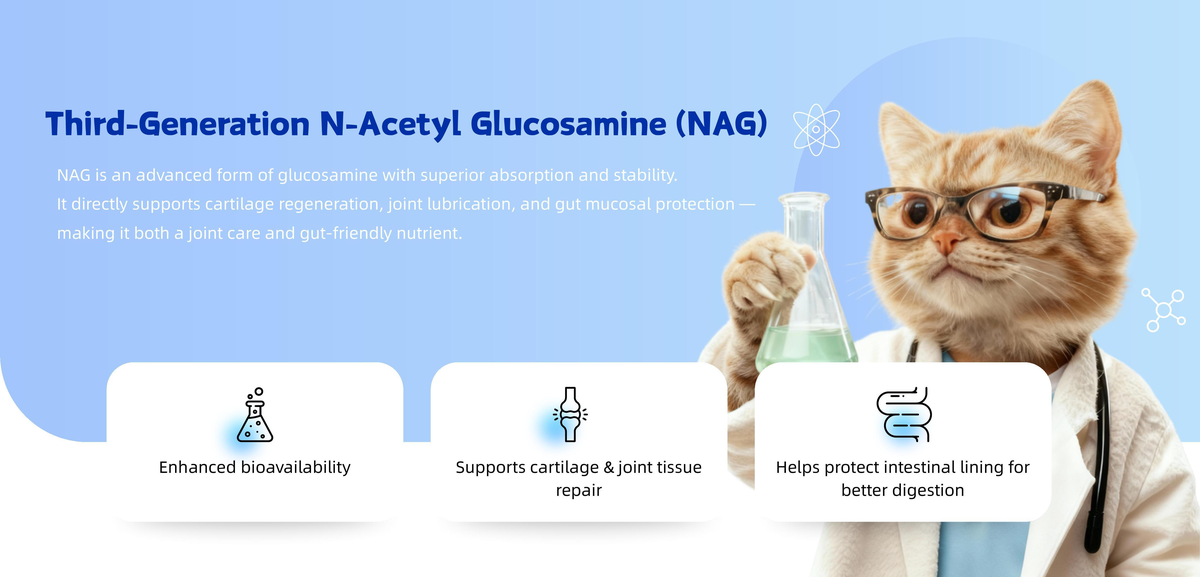
Quick answer: N-acetyl-D-glucosamine (NAG) is an amino sugar associated with glycosaminoglycans, which are structural components in animal tissues. Small feline studies have examined oral NAG, but the available evidence is limited and does not prove that a finished pet supplement prevents, treats or cures urinary, digestive or joint disease.

01 · Definition

What role does NAG have in Glumoo formulas?

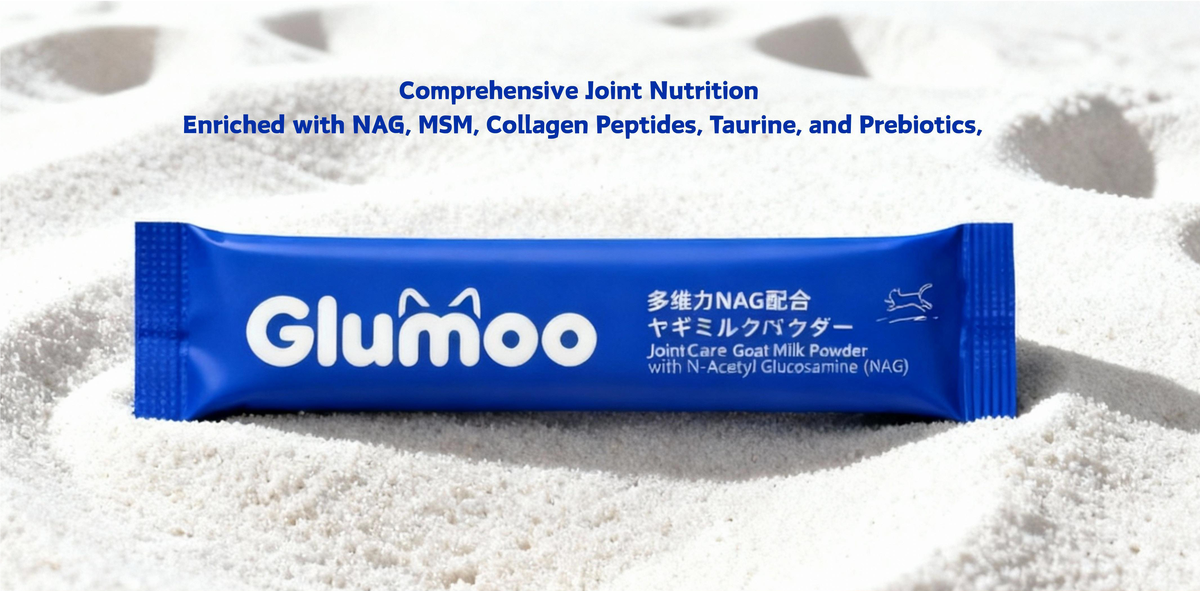
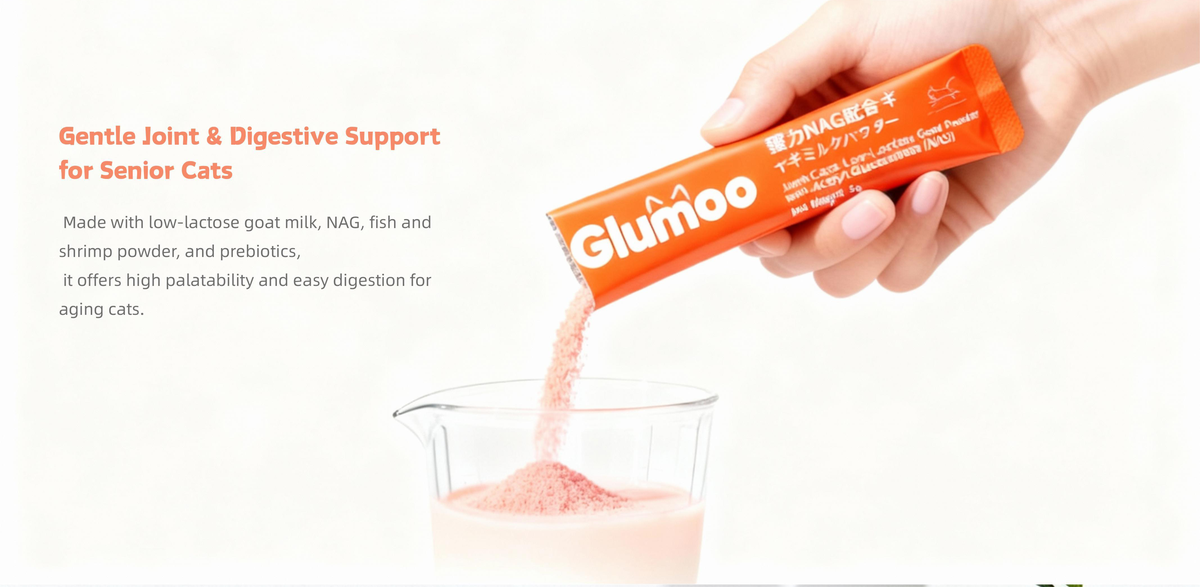
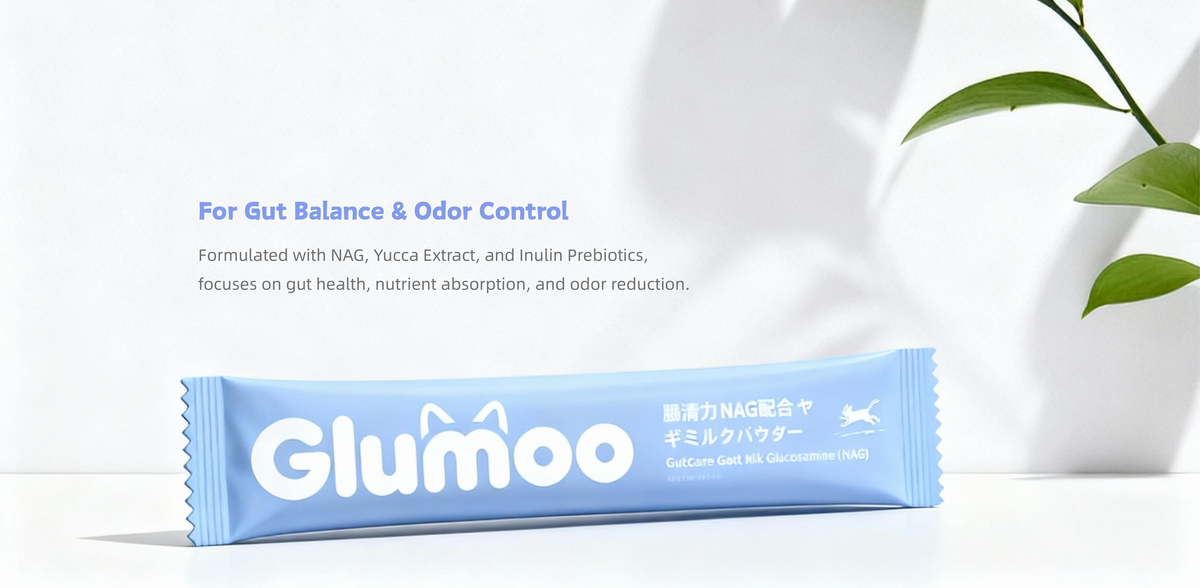
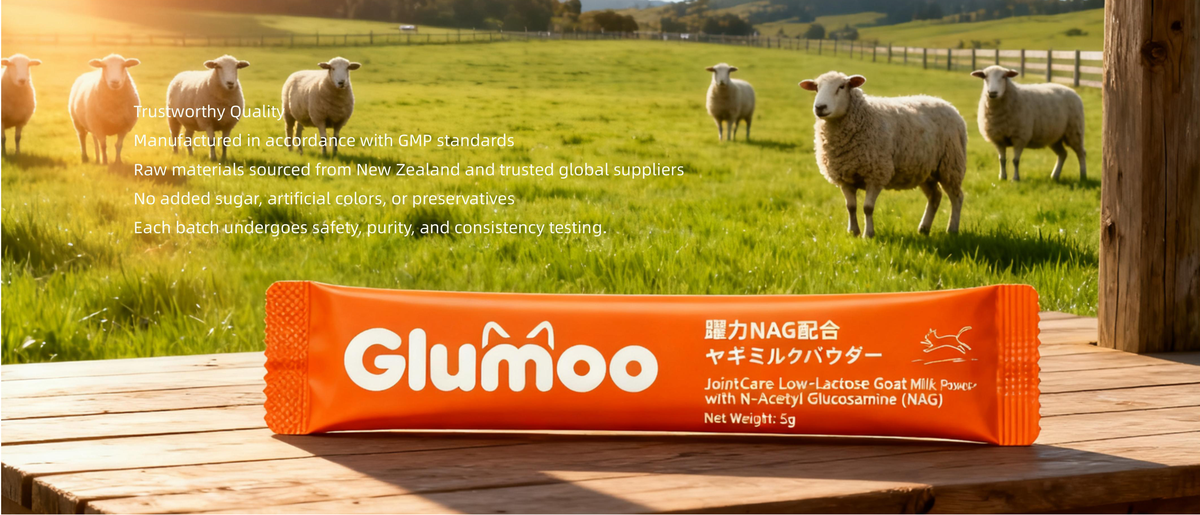
Current Glumoo formula materials declare approximately 200 mg NAG per single-serve sachet. The ingredient is presented as part of complementary nutrition—not as a medicine. Product selection should start with the animal, the formula's intended nutritional role and the current label.

  • DuoweiliCat-led daily and urinary wellness nutrition
  • ChangqingDigestive and gut nutrition for cats and dogs
  • YueliDog-led joint and mobility nutrition

02 · Evidence

What has feline research actually found?

EvidenceWhat it foundWhat it does not establish
2011 study: 19 cats with idiopathic cystitis plus 10 clinically normal catsIn the treated group, 250 mg oral NAG increased plasma glycosaminoglycan concentration after 21 days.It did not test Glumoo products or establish that 200 mg NAG treats clinical disease.
2004 randomised, placebo-controlled study: 40 cats with recurrent idiopathic cystitisBoth groups improved, with no significant difference between NAG and placebo on the reported clinical measures.It does not support a claim that oral NAG reliably prevents cystitis recurrence.
2025 systematic review of recurrent feline idiopathic cystitis managementThe review reported that evidence supporting glycosaminoglycans was lacking and highlighted stronger evidence for selected environmental and dietary strategies.It does not evaluate every NAG formulation, dose or nutritional use.

03 · Responsible use

How should a pet family use this information?

  1. Use the current pack. Follow its serving, mixing and storage directions; do not infer a dose from a research paper.
  2. Treat the product as complementary nutrition. It does not replace a complete diet, prescribed veterinary food or neonatal milk replacer.
  3. Watch the animal, not just the ingredient. Stop use and seek veterinary advice if vomiting, diarrhoea, itching, swelling or reduced appetite occurs.
  4. Do not delay care. Urinary difficulty, inability to pass urine, severe pain or persistent digestive signs can require urgent veterinary assessment.

Sources & accountability

Who reviewed this page, and where are the sources?

Content owner: Glumoo product information team. Last reviewed: . The summary deliberately separates ingredient research from finished-product claims.

Existing visual science materials

Glumoo science information panel 1
Glumoo science information panel 2
Glumoo science information panel 3
Glumoo science information panel 4
Glumoo science information panel 5
Glumoo science information panel 6
MEMBER Loading...